


Recommended Blogs

Blog
If You Can’t See It, You Can’t Secure It: Rethinking DBOps with Observability
Table of Content
- Observability Redefined: From Database Monitoring to Intelligence
- The Performance Paradox: Speed Without Sacrifice
- AI-Driven Insights in Database Observability
- The Road to Observability Maturity
- Transitioning from Reactive to Proactive Database Observability
- Transform Database Operations for Business Agility with TxMinds
Share On


Imagine your database as the backbone of your entire business, but what if you can’t see the cracks forming within it? Relying solely on basic performance metrics and outdated database monitoring tools might provide a surface-level snapshot, but it fails to uncover hidden threats, especially if logs are not being analyzed.
Traditional monitoring tools often report only overall response times, rather than providing granular insights for each database instance, which makes it challenging to pinpoint performance bottlenecks. Managing multiple databases across diverse cloud environments further complicates this, as limited visibility leads to slow queries, poor resource allocation, and undetected data integrity issues.
Even experienced database administrators can miss critical problems without comprehensive visibility. Traditional monitoring often fails to identify the root causes of performance degradation or uncover potential security vulnerabilities that could jeopardize business continuity.
What happens when these problems go unnoticed until they have caused significant damage? This blog explores the limitations of conventional monitoring approaches and highlights how database observability transforms the way enterprises manage performance, security, and reliability.
Key Takeaways
- Observability is more than monitoring; it delivers real-time, per-instance clarity on performance and risk.
- Businesses can achieve speed without sacrifice by driving better uptime, lower cost, and stronger data integrity.
- AI makes DBOps proactive by detecting patterns, predicting issues, automatically tuning systems, and reducing alert noise.
- Grow maturity through freshness, volume, distribution, schema, and lineage, and use CI/CD to keep improving.
Observability Redefined: From Database Monitoring to Intelligence
Traditional database management systems typically focus on fundamental metrics such as query performance and resource usage, offering a limited view of system health. Unified observability addresses this gap by providing comprehensive, end-to-end visibility across complex data environments. Modern observability tools, particularly those designed for SQL Server, provide detailed query performance analysis and in-depth insights into resource utilization.
Database observability is more than simple monitoring. It provides real-time information on all database activities, including query metrics and resource usage. It offers more in-depth intelligence, allowing teams to identify performance bottlenecks, discover costly resource-consuming queries, and address potential problems before they disrupt operations.
The Performance Paradox: Speed Without Sacrifice
When it comes to database operations management, high performance is a trade-off. Organizations should ensure that they can retrieve data quickly and make efficient queries without compromising integrity or security. Here, database observability services is crucial and can help teams strike the right balance between speed and resilience.
How Database Observability Impacts Business:
- Improved Application Performance: Businesses can enhance user experience and increase system responsiveness by reducing query latency and optimizing resource allocation, leading to higher customer satisfaction. Advanced database observability software provides the necessary tools to analyze and optimize system responsiveness.
- Minimized Downtime: Proactively identifies performance bottlenecks and ensures your database systems remain stable and secure. It reduces the risk of downtime or slowdowns during peak business periods.
- Cost Savings: By effectively utilizing resources such as CPU and memory, businesses can reduce the cost of operation as they optimize resource usage and prevent over-provisioning.
- Enhanced Data Integrity: It ensures that all data is processed safely and accurately, thereby preventing issues such as data corruption, unauthorized access, and data loss. Consequently, the business maintains trust among customers and stakeholders.
- Faster Decision-Making: Provides real-time insights into database performance and resource usage, enabling businesses to make more informed decisions and accelerate processes such as reporting, analytics, and data-driven actions.
- Scalability: Database observability provides the flexibility and responsiveness needed for systems as the organization scales, even when demand is high. It promotes business scalability without compromising performance and security.
AI-Driven Insights in Database Observability
As AI and machine learning are on the increase, database observability has taken a new dimension where observability can be viewed as a reactively monitored or actively managed.
The following is the way AI-driven intelligence is changing DBOps:
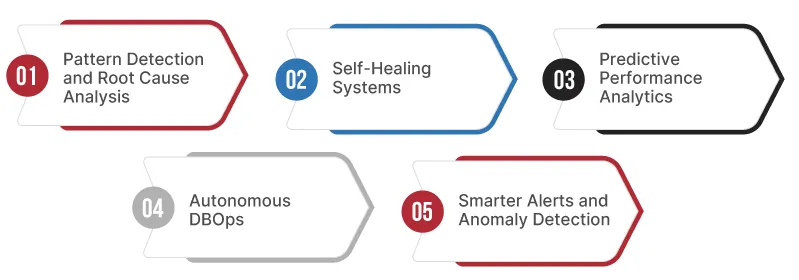
- Pattern Detection and Root Cause Analysis: AI analyzes historical and real-time query metrics to spot recurring patterns and automatically identify the root causes of performance degradation.
- Self-Healing Systems: With the help of automation through AI, it is possible to have database systems that repair themselves. As an example, the system is able to automatically self-tune poorly performing queries or re-allocate resources to balance the load to reduce the need for manual intervention, and as a result, minimize downtime.
- Predictive Performance Analytics: AI can predict the future load of a database by analyzing operating patterns and consumption of resources. The businesses can foresee the spike in traffic or the enhanced complexity of queries and allocate the resources proactively to ensure maximum performance during the peak time.
- Autonomous DBOps: With the further development of AI, autonomous DBOps is a reality. Machine learning models are responsive to past database performance and will continually optimize resource management as well as query optimization, and will thereby require minimal manual monitoring and adjustment.
- Smarter Alerts and Anomaly Detection: AI can identify anomalies in database operations and trigger more intelligent, context-aware alerts. Instead of generating false positives, these alerts provide relevant, actionable insights into potential threats, such as suspicious transactions or unauthorized access.
The Road to Observability Maturity
Achieving the maturity of database observability goes beyond monitoring performance indicators. It needs a statistical basis of continuous improvement. An operational database that is well-maintained is also a part of this foundation, which facilitates real-time operations of transactions and long-term performance management.
Key Pillars of Observability Maturity
The central pillars of database observability allow organizations to get a holistic picture of the database ecosystem, allowing them to monitor data from various perspectives.
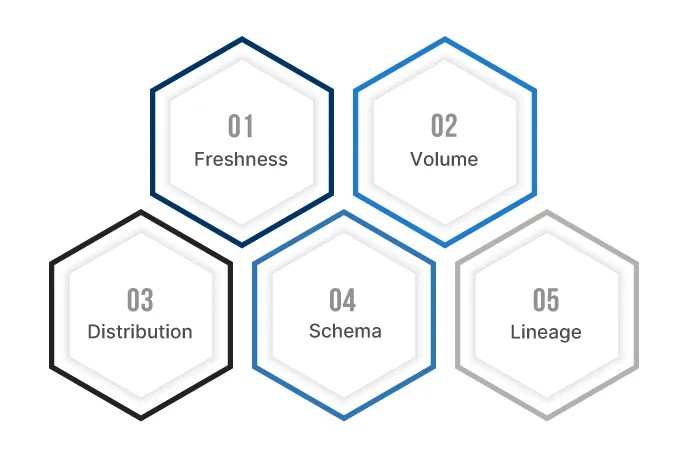
- Freshness: This pillar ensures that data is updated in a timely manner. Monitoring data freshness helps identify delays in data processing or issues with data pipelines.
- Volume: Tracking the amount of data will reveal any unexpected changes, such as an increase or decrease in the number of rows. This is essential in determining system overloads or data gaps.
- Distribution: Distribution helps determine the statistical occurrences of anomalies in values or value patterns through analysis of the statistical properties of data. It ensures that data does not exceed the anticipated levels, allowing for more effective decision-making.
- Schema: By observing the data structure, e.g., table definitions and column properties, one can identify changes, such as added or dropped columns, which can result in data integrity or compatibility problems with the application. The change tracking schema also helps keep track of operations that involve data deletions, such as dropped columns or tables.
- Lineage: This pillar can be used to trace data flow between its origin and its destination. Knowing data lineage helps in tracing the way data is changed and utilized within the system, making it easier to troubleshoot and determine the effects.
Transitioning from Reactive to Proactive Database Observability
Organizations must shift from a reactive approach to a proactive one to fully harness the power of database observability. This transformation enables teams to identify and resolve issues before they impactperformance, security, or data integrity.
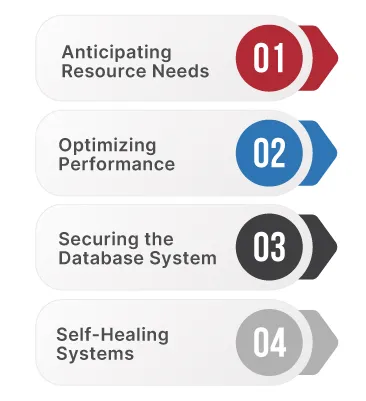
- Anticipating Resource Needs: Observability systems leverage historical performance and resource consumption data to forecast increases in database traffic or levels of query complexity. It allows businesses to make timely adjustments and prevent performance bottlenecks from occurring.
- Optimizing Performance: Proactive performance optimization management goes beyond simply observing slow queries. By continuously tracking data freshness, volume, distribution, and schema, organizations can fine-tune query performance and resource utilization while ensuring transactional databases remain stable and unaffected.
- Securing the Database System: A proactive observability approach enables early detection of suspicious transactions, unauthorized access, and data integrity issues, before they escalate into significant risks. Recognizing the risk before the event allows an organization to act quickly. This helps ensure that proper information security controls are in place to safeguard both customer and mission-critical business data.
- Self-Healing Systems: With AI-powered insights and machine learning, observability systems can evolve into self-healing environments. For example, resource-intensive queries or inefficient execution plans can be automatically optimized, further minimizing downtime and reducing the need for manual intervention.
Transform Database Operations for Business Agility with TxMinds
Database observability is crucial for enhancing performance, optimizing resource utilization, and ensuring data integrity. With real-time insights, businesses can proactively address issues, reduce downtime, and make faster and data-driven decisions.
At TxMinds, we provide advanced DBOps solutions that combine AI, automation, and cloud expertise to optimize database performance, security, and scalability. Our DBOps services help organizations modernize and manage databases seamlessly across AWS, Azure, and Google Cloud. Book a consultation with our database operations experts to design a roadmap that delivers measurable enterprise results.


Amar Jamadhiar
VP, Delivery North America
Amar Jamadhiar is the Vice President of Delivery for TxMind's North America region, driving innovation and strategic partnerships. With over 30 years of experience, he has played a key role in forging alliances with UiPath, Tricentis, AccelQ, and others. His expertise helps Tx explore AI, ML, and data engineering advancements.
FAQs
What is database observability?
Data observability is the practice of understanding, monitoring, and managing the health and reliability of data across systems. It offers a holistic and real-time view of performance and data quality, enabling teams to identify, diagnose, and resolve issues efficiently.
How to monitor database performance and security?
You can monitor database performance by tracking query metrics such as query performance and resource utilization, and use anomaly detection tools. For security, monitor audit logs, set automated alerts, and watch for unauthorized access or suspicious activity.
What are the benefits of integrating databases into a CI/CD pipeline?
Integrating databases into a CI/CD pipeline accelerates deployments, ensures consistent environments, and enhances quality through automated testing and version control. It also enables continuous performance optimization and security enhancements.
Discover more