Recommended Blogs

Blog
The Silent Threats of Legacy Systems Risk: A Path to Modernization
Table of Content
- Why Legacy Systems Persist in Modern IT Environments
- The Hidden Risks of Running Legacy Applications
- Signs It’s Time to Replace or Modernize Legacy Applications
- Best Practices for Mitigating Legacy Application Risks
- Modernize Legacy Applications and Reduce Risk With TxMinds
Share On


Nearly half of IT decision-makers report that legacy maintenance costs exceeded their expectations last year. That number is more than a budget surprise. It is a warning sign that many enterprises are paying a growing premium just to keep legacy systems running.
Legacy applications often sit quietly behind critical business functions, processing orders, serving customers, and moving data from one team to another.
On the surface, they seem stable because they still work. In contrast, they can be the most fragile part of the stack. Small changes take weeks, integrations break easily, and the systems become harder to support each year. What starts as “keep it running” turns into a slow drain on time, talent, and momentum.
The bigger concern is risk. Many legacy systems run on outdated technology that no longer receives reliable vendor support or security updates. That creates gaps that attackers look for, and it increases the chance of downtime when something fails. Compliance expectations also keep moving, and older applications often struggle to meet modern standards for data access, logging, and controls.
Therefore, modernization is not just about upgrading technology. It is about reducing legacy systems risk and removing hidden operational constraints that limit agility, innovation, and growth.
Explore the blog to understand why legacy systems persist, the hidden risks they introduce, and the signs it is time to act. Also, discover the most practical paths to modernization.
Key Takeaways
- Nearly half of IT decision-makers report legacy maintenance costs exceeded expectations last year.
- Only 27% of IT executives say organizations have modernized required workflows.
- Legacy applications pose security vulnerabilities, compliance challenges, high costs, and agility loss.
- Signs for modernization include frequent downtime, integration issues, and scalability limits.
Why Legacy Systems Persist in Modern IT Environments
Despite the risks, legacy systems persist in many organizations. One of the primary reasons is the significant investment that has already been made in these applications. The complexity and custom nature of legacy software can make it difficult to replace, especially for large enterprises that rely on these systems for mission-critical functions.
Over time, these systems have become deeply embedded in business processes, and the idea of modernizing them seems daunting due to the potential disruption to operations.
Additionally, there is a lack of immediate, tangible benefits from upgrading or replacing legacy systems, which can cause decision-makers to delay or avoid the transition. Even when modernization is seen as strategic, execution often lags; only 27% of IT executives say their organizations have modernized the required workflows across applications, data, and systems.
Many enterprises simply opt for patching and maintaining these systems rather than facing the challenges of modernization. However, this short-term approach comes at the expense of long-term business agility and security.
From Al Pilots to Al at Scale
Engineering the Transition to Operational Al in the Enterprise
Download White PaperThe Hidden Risks of Running Legacy Applications
The risks associated with running legacy applications are often overlooked until they lead to serious issues. Below are some of the key dangers that organizations face when relying on outdated systems:
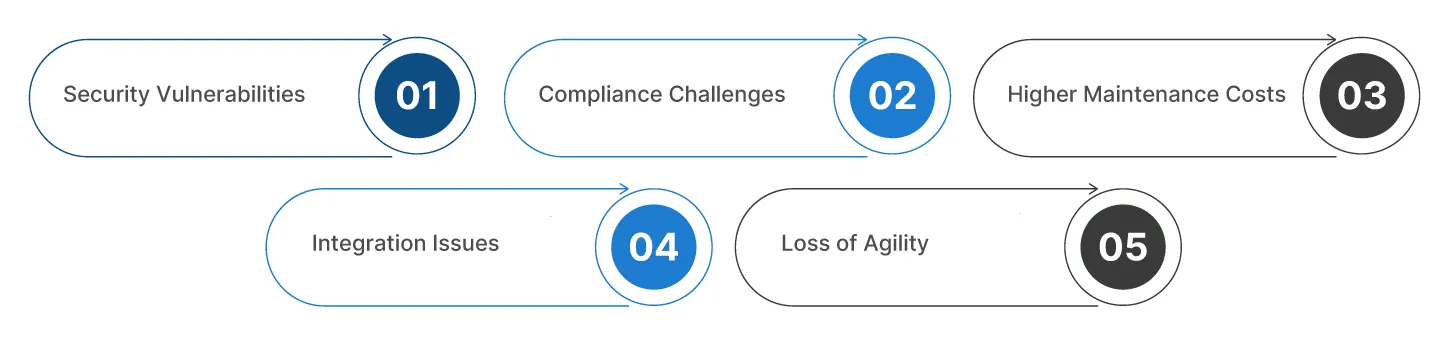
- Security Vulnerabilities: Legacy applications are often not supported by the latest security patches or updates, making them prime targets for cyberattacks. Hackers can exploit known vulnerabilities in older software, putting sensitive business data and customer information at risk.
- Compliance Challenges: As regulations around data privacy and security continue to evolve, legacy systems may fail to meet the latest compliance requirements. It can lead to hefty fines and reputational damage if sensitive data is compromised.
- Higher Maintenance Costs: Maintaining outdated systems can be costly. As these applications become harder to support, organizations need to invest more in specialized personnel or third-party services to keep them running.
- Integration Issues: Legacy applications often struggle to integrate with modern technologies or other business-critical applications, leading to inefficiencies and silos within the organization.
- Loss of Agility: The inability to rapidly innovate or adapt to changing market conditions is a major disadvantage of using legacy systems. Modern applications, with their scalability and flexibility, offer businesses the ability to evolve quickly, whereas legacy systems limit this potential.
Taken together, these hidden risks turn legacy applications into active business liabilities. The longer they remain in place, the more they increase the odds of security incidents, compliance setbacks, rising costs, and operational disruption.
Signs It’s Time to Replace or Modernize Legacy Applications
Recognizing when it’s time to replace or modernize legacy applications is key to preventing further risks and ensuring business continuity. Below are several signs that indicate it is time to act:
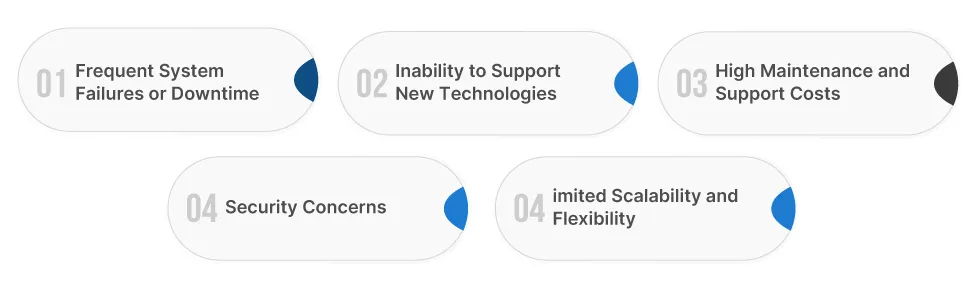
- Frequent System Failures or Downtime: If legacy systems are causing significant downtime or disruptions to business operations, it’s a clear sign that modernization is needed. Frequent failures can lead to lost revenue, customer dissatisfaction, and productivity losses.
- Inability to Support New Technologies: As the business world shifts toward cloud computing, AI, and data analytics, legacy systems often struggle to integrate with these advanced technologies. If your legacy applications are preventing your organization from leveraging modern tools, it’s time for an upgrade.
- High Maintenance and Support Costs: If the cost of maintaining legacy systems is rising without a corresponding increase in value, it’s a sign that continuing to rely on them may not be sustainable. The cost of keeping outdated systems running can far exceed the investment needed for a more efficient and secure solution.
- Security Concerns: When legacy applications are no longer supported with security updates, they become increasingly vulnerable to breaches. If your system is no longer receiving necessary security patches, it poses a major risk to your organization.
- Limited Scalability and Flexibility: Legacy systems may not be able to scale to meet the growing demands of your business. If your system struggles to handle increased workloads or adapt to changing business needs, it’s time to explore modernization options.
If you are seeing even a few of these signs, the real cost is not just IT spend, it is lost speed, higher risk, and a weaker customer experience. Acting early gives you more control over timelines and budgets, instead of forcing a rushed response after the next outage or security incident.
Best Practices for Mitigating Legacy Application Risks
Reducing legacy systems risk is often a two-track effort. It contains today’s exposure while you modernize in stages. The goal of modernizing legacy applications is to lower downtime, security, and compliance risk without disrupting business.
The best practices for modernizing legacy apps include:
1. Start With a Clear Plan and Priorities
Legacy application risks are easiest to control when you know exactly which systems matter most and why. Build a simple portfolio view of your legacy apps and rank them by business criticality, outage history, customer impact, and how hard they are to maintain. It helps you surface the hidden risks of running legacy applications and avoid spending time modernizing low-value systems first.
- Inventory and classify legacy apps by business impact and technical risk
- Prioritize systems with frequent incidents and high customer or revenue impact
- Choose a phased plan that reduces risk early and shows progress quickly
- Pick the right path per system, update, replatform, refactor, or replace
2. Reduce Security and Compliance Exposure First
Security vulnerabilities in legacy systems often come from unsupported runtimes, old libraries, and weak access controls. Even if you cannot modernize immediately, you can reduce exposure by tightening entry points, limiting who can access the system, and isolating high-risk components. Further, legacy software can create real compliance risks when it handles sensitive data in ways that no longer meet current requirements.
- Lock down access with least privilege and stronger authentication
- Reduce attack surface by segmenting networks and restricting inbound traffic
- Patch what you can, isolate what you cannot, and document exceptions
- Review data flows, retention, and logging to reduce compliance risks from legacy software
3. Improve Reliability While You Modernize
Downtime and reliability issues in legacy systems rarely improve on their own. Small stability steps can reduce operational risks of outdated applications while you plan larger modernization work. Focus on visibility first so teams can spot failures early, understand root causes, and prevent repeat incidents.
- Add monitoring for uptime, response time, error rates, and key jobs
- Set alerts and on-call paths for the most critical failures
- Improve backups and test restores, not just backup completion
- Automate regression tests for critical workflows to avoid introducing new outages
4. Make Modernization Sustainable for the Team
Legacy systems risk increases when only a few people understand how the system works. As you modernize legacy applications, spread knowledge and set clear ownership, so that the system is not dependent on tribal memory. Training and change management also matter because new platforms, tools, and processes fail when teams are not ready to run them day to day.
- Document critical flows, dependencies, and common failure points
- Create runbooks for incident response and routine operations
- Upskill teams on the target stack and new operational practices
- Assign clear ownership for releases, support, and long-term maintenance
A phased approach makes legacy application risks manageable without disrupting daily operations. It reduces legacy systems risk now and creates a clearer, safer path to modernizing legacy applications.
Modernize Legacy Applications and Reduce Risk With TxMinds
At TxMinds, we treat modernizing legacy applications as a business transformation, not a technical cleanup. We help you lower legacy application risks by focusing on what creates the most exposure first: rising maintenance burden, security vulnerabilities in legacy systems, compliance risks from legacy software, and downtime and reliability issues in legacy systems.
Our legacy application modernization services follow a clear path that fits your environment, starting with cloud readiness and cloud native modernization options like rehosting, replatforming, refactoring, and rearchitecting for containers and serverless. We also modernize data and integrations through API enablement and middleware refactoring, while strengthening security and compliance with controls such as encryption and identity management aligned to PCI DSS, HIPAA, and GDPR.
Book a consultation to identify modernization opportunities and build a roadmap with our experts.


Amar Jamadhiar
VP, Delivery North America
Amar Jamadhiar is the Vice President of Delivery for TxMind's North America region, driving innovation and strategic partnerships. With over 30 years of experience, he has played a key role in forging alliances with UiPath, Tricentis, AccelQ, and others. His expertise helps Tx explore AI, ML, and data engineering advancements.
FAQs
What are the hidden risks of running legacy applications?
-
Hidden risks of running legacy applications include security vulnerabilities, compliance failures, escalating maintenance costs, integration difficulties, and reduced business agility that hinder innovation.
How do security vulnerabilities in legacy systems impact businesses?
-
Security vulnerabilities in legacy systems arise from outdated software lacking patches, making them easy targets for cyberattacks that expose sensitive data and customer information.
What are the operational risks of outdated applications?
-
Operational risks of outdated applications involve frequent downtime, integration silos with modern tech, and high support costs that drain resources and limit scalability.
Why address compliance risks from legacy software and downtime issues?
-
Compliance risks from legacy software stem from failing evolving data privacy standards, leading to fines, while downtime and reliability issues in legacy systems cause revenue loss and poor customer experiences.
Discover more