Organizations collectively responsible for over $69 billion in cloud spend are leveraging FinOps to optimize and manage their financial operations.
As enterprises rapidly scale their cloud operations, many are finding themselves grappling with a critical issue: rising, unpredictable cloud costs. What was once a flexible and cost-effective solution has turned into a financial challenge that is difficult to control or predict. For leaders, the stakes are high as cloud expenses can quickly spiral out of control, leading to wasted resources and missed opportunities.
To thrive in a cloud-first world, businesses must adopt cloud FinOps solutions to enhance financial accountability, optimize cloud costs, and ensure continuous optimization of cloud investments. It’s a powerful approach that aligns finance, operations, and technology teams to ensure that every dollar spent on the cloud is justified, optimized, and driving value for the business.
For executives, it is about enabling financial accountability, improving decision-making, and ensuring that cloud investments deliver the maximum return. In this blog, we will explore how enterprises can move from mere visibility into their cloud spend to true financial accountability, driving both operational efficiency and strategic value.
Key Takeaways
TCS reveals 30% cloud spend lost to poor visibility; McKinsey flags 10-20% untapped savings via rightsizing.
Collaboration, visibility (AWS Cost Explorer), and allocation unite teams for accountable cloud decisions.
Rightsized instances, commit to Reserved Instances, and adopt serverless architecture to slash over-provisioning.
Governance, tools like CloudHealth, and reviews ensure ongoing financial control and value.
Why Cloud Spending Becomes Unpredictable in Modern Enterprises
Cloud adoption has introduced new paradigms of flexibility and scalability, but it also brings the challenge of unpredictable cloud spending. Unlike traditional IT infrastructure, where costs are often fixed and predictable, cloud services operate on a pay-as-you-go model. The pay-as-you-go model, while offering flexibility, can also lead to cloud costs that spiral out of control without effective cloud FinOps practices. Implementing a FinOps cloud framework can ensure that cloud usage is aligned with financial goals, mitigating the unpredictability of cloud expenses.
According to a report by TCS, 30% of cloud spend is wasted due to inefficiencies in resource allocation, lack of visibility, and poor cost management practices. This waste occurs when businesses fail to optimize cloud usage or allocate costs correctly, resulting in unnecessary expenses. The inherent flexibility of the cloud model, where companies can scale up or down quickly can also lead to over-provisioning or under-utilization of resources, exacerbating this unpredictability.
For many organizations, the unpredictability of cloud spending is not a matter of poor planning, but a result of how cloud services are consumed and how costs are allocated. Without clear visibility into consumption patterns, businesses struggle to align their cloud strategies with their financial objectives. This is where FinOps comes into play: by providing a FinOps cloud framework to bring cloud financial management into the mainstream, companies can establish control over their cloud spending, from tracking costs to optimizing usage.
Understanding FinOps: Principles, Roles, and Collaboration Model
Cloud FinOps is an emerging discipline that unites the traditionally siloed worlds of finance, technology, and operations to manage cloud costs effectively. Its goal is not only to provide visibility into cloud spending but also to foster accountability and continuous optimization.
The principles of cloud FinOps center around three main pillars:
Collaboration: FinOps relies on cross-functional collaboration. Finance, IT, and business teams must work together to ensure that cloud usage aligns with organizational goals. This fosters a culture of shared accountability where each department understands the financial implications of cloud decisions.
Visibility: Without visibility, there can be no meaningful financial management. FinOps creates transparency by providing stakeholders with detailed insights into where and how cloud resources are being used. This data helps drive informed decision-making at all levels of the organization.
Optimization: The ultimate goal of FinOps is cost optimization. By continuously monitoring cloud consumption, organizations can identify areas of waste, adjust usage patterns, and ensure that resources are appropriately allocated. The aim is not just to reduce costs but to ensure that every dollar spent on cloud services delivers value.
The FinOps team typically consists of cloud architects, finance analysts, and business leaders, each playing a critical role in ensuring the success of the practice. As the practice matures, it evolves from simply tracking costs to strategically managing cloud expenditures to drive business outcomes.
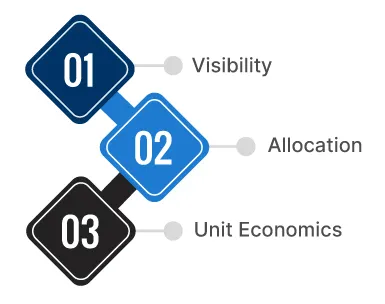
Core FinOps Capabilities: Visibility, Allocation, and Unit Economics
To truly unlock the power of FinOps, organizations must first develop core capabilities that form the foundation of financial operations in the cloud. These capabilities are critical to transitioning from visibility to financial accountability.
1. Visibility
The first step in the cloud FinOps journey is achieving transparency into cloud spending. Without a clear understanding of where and how resources are being used, organizations cannot effectively manage costs. Tools like AWS Cost Explorer, CloudHealth, and Azure Cost Management help provide this visibility by offering detailed reports and dashboards that break down costs by department, team, or project.
2. Allocation
Once visibility is established, it’s essential to allocate cloud costs to the right teams or projects. This allocation model ensures that each unit within the organization is responsible for its share of cloud spending. By tagging resources appropriately, organizations can map costs to business units, allowing for more accurate financial reporting and accountability.
3. Unit Economics
Unit economics refers to understanding the cost per unit of service, whether that’s cost per user, transaction, or workload. This concept is vital because it provides a direct link between cloud costs and business outcomes. It allows organizations to assess whether they are getting the desired return on their cloud investments and whether spending aligns with business value.
In fact, McKinsey estimates that many businesses have 10–20% of their cloud costs as untapped savings, which underscores the need for deeper visibility and more refined cost allocation. By identifying these savings, organizations can drastically reduce waste and improve financial performance.
Optimization Levers: Rightsizing, Commitments, and Architecture Choices
Optimization is where organizations begin to move beyond visibility and allocation toward actively managing and reducing cloud costs. Several levers can be pulled to ensure that cloud resources are being used efficiently.
1. Rightsizing
Rightsizing refers to the practice of adjusting cloud resources to match actual usage. Many businesses over-provision resources in anticipation of future demand, leading to unnecessary spending. With the help of tools like AWS Trusted Advisor and Azure Cost Management, organizations can analyze usage patterns and resize instances to better align with demand, thereby eliminating waste.
2. Commitments
Cloud providers offer discounted pricing models for customers who commit to using their services over a longer period. Reserved Instances or Savings Plans allow businesses to lock in discounted rates for a specified usage level. However, making these commitments requires a high level of forecasting and planning. Accurate predictions of future needs are essential to avoid overcommitting and locking in unnecessary costs.
3. Architecture Choices
Cloud architecture plays a significant role in cost optimization. By choosing the right architecture, such as serverless computing or containerization, businesses can ensure that they only pay for the resources they use. Additionally, leveraging auto-scaling ensures that cloud resources automatically adjust to traffic fluctuations, helping to further optimize costs.
Each of these levers plays a crucial role in ensuring that cloud spending is aligned with business needs. By implementing these strategies, organizations can start to see measurable improvements in both cost efficiency and operational performance.
Operationalizing Cloud FinOps: Tooling, Governance, and Continuous Improvement
At this stage of maturity, organizations have moved beyond basic visibility and are fully operationalizing their FinOps practices. This involves integrating FinOps into daily operations and ensuring that financial accountability is a continuous process.
Tooling: Effective FinOps practices require the right set of tools. These tools help automate cost tracking, reporting, and optimization. Cloud cost management platforms like CloudHealth, CloudCheckr, and native tools from AWS and Azure provide organizations with the insights needed to track spending, set budgets, and identify optimization opportunities.
Governance: Governance is a critical aspect of operationalizing FinOps. Without proper governance frameworks, cloud spending can quickly spiral out of control. Financial controls such as approval of workflows, budget alerts, and anomaly detection ensure that every decision made around cloud usage is financially responsible.
Continuous Improvement: FinOps is not a one-time initiative but a continuous process of optimization and refinement. As the cloud environment evolves, so should the cloud FinOps strategy. Organizations must regularly review and adjust their practices to keep pace with new technologies, business needs, and cost-saving opportunities.
By embedding FinOps into the organization’s culture and operations, businesses can maintain financial accountability, optimize spending, and continuously refine their cloud strategy.
How TxMinds’ FinOps Cloud Services Enables Financial Accountability
At TxMinds, we understand the complexities of cloud financial management and the importance of embedding FinOps into the fabric of an organization. Our tailored cloud FinOps solutions help businesses navigate each phase of the cloud FinOps maturity journey, from establishing visibility to achieving full accountability.
With a deep understanding of cloud cost management, we empower organizations to optimize their cloud investments through advanced tools, governance models, and continuous improvement strategies. Our expertise enables businesses to scale efficiently while ensuring that every dollar spent on cloud services drives value.
Amar Jamadhiar is the Vice President of Delivery for TxMind's North America region, driving innovation and strategic partnerships. With over 30 years of experience, he has played a key role in forging alliances with UiPath, Tricentis, AccelQ, and others. His expertise helps Tx explore AI, ML, and data engineering advancements.
FAQs
What is cloud FinOps?
Cloud FinOps is a framework for uniting finance, IT, and operations for visibility, accountability, and continuous optimization of cloud spending in pay-as-you-go models.
How to implement FinOps for cloud costs?
Start with visibility using tools like AWS Cost Explorer, tag resources for allocation, then apply rightsizing and commitments while establishing governance for ongoing reviews.
How can FinOps practices optimize cloud costs?
FinOps practices optimize cloud costs by tackling 30% waste through collaboration, unit economics analysis, and levers like rightsizing and serverless architecture for 10-20% savings.
What are the steps for choosing a FinOps partner for cloud optimization?
Choosing a FinOps partner for cloud optimization involves selecting experts in multi-cloud tooling like CloudHealth, proven governance frameworks, and continuous improvement to drive accountability and 10-20% savings across environments.